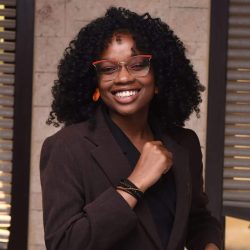
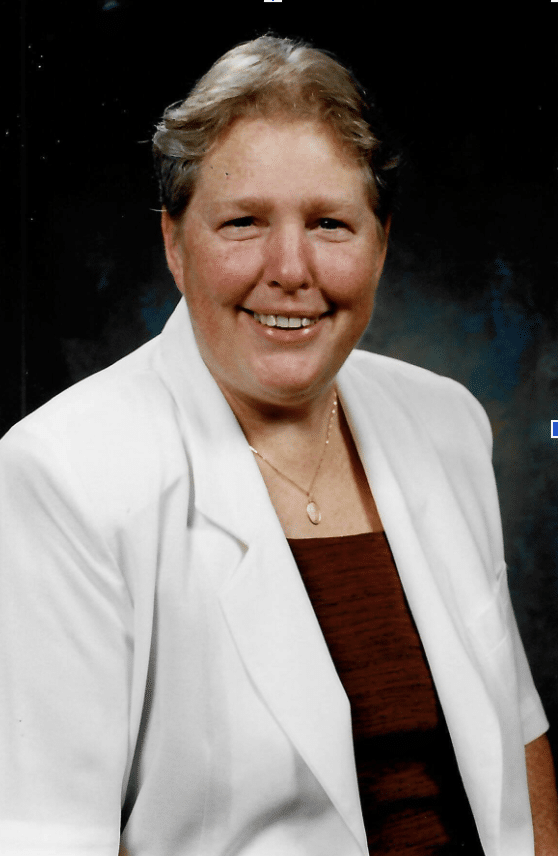
This oral history interview with Sister Diane Cundiff took place on April 28th, 2026, and was conducted by Tess Myers, Amelia Hodges, and Genevieve Tremblay.
Interview with Sister Diane Cundiff
(this interview lasted approximately 56 minutes)
Can you speak on where you grew up and your educational background? Do you come from the community you now serve?
I was born in Kansas City, Missouri. When I was 6, my father was invited to organize the educational system of Iran, and we then lived in Isfahan, Iran, for 3 years. My two sisters and I went to a French boarding school there. Therefore, we were educated in Farsi and in French, and we spoke English with my dad at home. In third grade, while my dad was getting his Master’s in agriculture since he’d grown up on a farm, we moved back to the US and lived in Goshen, Indiana. I went to a Catholic grade school for 5th through 8th grade and then went to a boarding school at St. Mary’s Academy in Notre Dame, Indiana.
I wanted to go to Catholic school because I was thinking about a religious vocation. I had read that if you don’t go to Catholic school, you lose your vocation. Then I went to St. Mary’s College and majored in history. I love history, but was also interested in a lot of other courses in college, such as Bible study. Later, I got my master’s degree at Valparaiso in sociology.
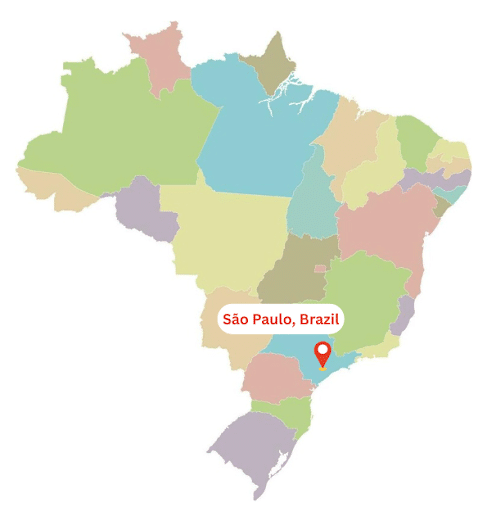
I went to Brazil to continue my education toward becoming a school administrator. So I do not come from the community I currently serve. I came from the United States, but I’ve been living here in São Paulo, Brazil, since 1973, and have been the director of the school since 1983.
What was your journey to becoming a Sister of the Holy Cross?
When I was a kid, I learned in catechism that there are three vocations. One was to religious life, one was to marriage, and one was to single life. Single life wasn’t for me, married life was the one most people chose, and religious life was one that few people chose. I saw vocation more as a choice rather than being called to it. I assumed that if I chose a religious life, then I would be allowed into heaven. It’s a silly reason, but that’s how I got where I am.
When I was a little older, what attracted me to religious life was the idea of service. At first, I always had the idea that I would leave this profession at some point in my life, but I always came back. God constantly interfered with my choices, drawing me back to religious life. I was always able to say yes to opportunities that I had not planned or figured out, open to being called to this life.
Once a part of religious life with the Sisters of the Holy Cross, I was convinced I would go to Africa in their civil rights program. In the ’60s, I thought I would go to Africa. I studied African history to be prepared for the congregation to send me to Africa. Except, they said, “No, you can go to Brazil.” I thought, “Brazil? What would I do in Brazil?” But it was the right place and the place where I lived out my religious life.
In terms of the pathway to religious life, it’s a pathway to a rich life. It is a pathway to making the most of your purpose for being alive on this earth. You need to say yes to every opportunity that is for the good of the planet.
How did you become involved with your current work? What inspired you to serve this community or country?
My work has to do with education. When I was younger, I was thinking of going into a profession in law or writing. I always came back to education, however. It was one of the broadest careers you could go into, and it opened more possibilities than anything else. As people get a little older, they can become hostile, and they can become closed-minded. But youth, they don’t realize that there are any limits. They’re willing and open to try anything. The longer I’m in education, the stronger I believe that any transformation that happens in the world for the better will go through education and its values. I’m speaking of simple content education, but how that content permits kids to use their values in a more competent way. From that alone, I’ve never regretted being in education.
When I first arrived in Brazil, there had never been many sisters who were in education or who wanted to be in education or who wanted to stay in education. Even though the school has had at one time or another approximately 3,000 people from ages 2 through adults, in the last 40 years, there hasn’t been more than 2 sisters working at the school. That only made me more drawn to education. I’m working with a lot of lay people who are extremely committed to a project of Father Muro through education, and I’ve learned it’s a society of love. You can suffer together, and you can laugh together. There’s always new thoughts about education and new content ideas being put together, and new ways of looking at life. I’ve worked with a lot of different people for a long time. I would say life has been really great and inspiring thanks to the people with whom I’ve worked.
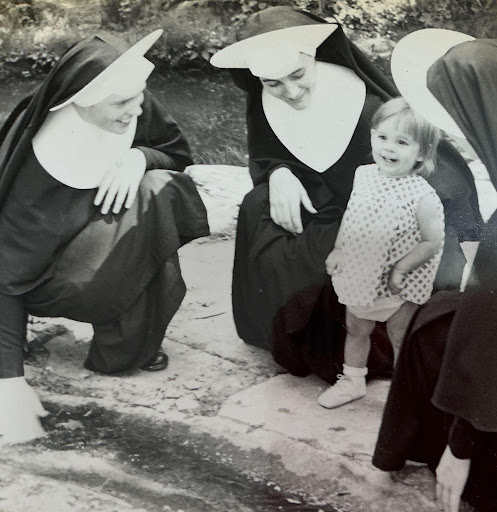
Sister Diane and other sisters bonding with youth and grand niece, Cathy Weble.
What work do you do and what does it look like on a day-to-day basis?
On a day-to-day basis, my job involves a lot of meetings. My basic job was always doing a lot of reading and a lot of reflection. Often in these meetings, people would come to me with a proposal of some sort. I would raise questions of possible problems or challenges, things that needed to be reflected on more deeply to get the best possible outcome. Everybody has their own opinion and something to say. It can be hard with 550 employees, each with their own opinion. Either way, everybody should be reflecting, being able to listen to different opinions without trying to push their own. At my job, I look at what solutions are being put out, and listen to everybody to create something that nobody brought as the original proposal, but creates the best possible solution.
In terms of the schedule, it always depended on the day. Every day looks different on our agenda. Our school runs 7 days a week and starts at 7 am and goes until 10:30 to 11 pm. There’s always something like a parent meeting happening. I used to love to go to different kinds of activities like student productions, school dances, and sports. I enjoyed myself a lot at those events. I liked that not every day was the same. It was always something different. I never really felt that I was restricting myself to any time. I never felt like I was waiting to get home because the school was like my second home.
I never found my life or work dull. I never felt like I was pressed into working. When you’re the head director, your time is your own.
How has climate change affected your community? When did you first notice these changes? What future impacts do you foresee?
In high school, I read a book by Rachel Carson, and it talked a lot about the use of pesticides. There were also several books about the killing of the cows in Chicago and all of the things that were destroying nature. They were all problems that were resolvable. Reading these books was the first time climate change became apparent to me.
It’s hard to decipher that climate change exists when it feels normal. It takes a while to realize that climate change is not normal. Climate change is a result of decisions that humans make. And there’s a piece of it that’s normal, but almost all of it is a result of human decisions.
I cannot pinpoint an exact moment I noticed climate change was happening, but I can remember in the year 2000, the different international climate conferences would raise the issues and talk about climate change, like the Earth Charter. With the internet, with television, everything you hear on the news all over the world about climate change, how many people it’s killing, and the impacts, it becomes really apparent. That’s when I started seeing climate change as a broader issue, and not just climate change, but thinking deeper about how it’s caused and who it impacts.
I see it in the place I work, with the classrooms that before, had normal weather, and now, are using air conditioning. You have people fainting, and the cold water fountains aren’t enough. Some don’t realize that it has to do with climate change. We live in a temperate climate. We don’t have snow. Though for the most part, our climate here in São Paulo is better than most because we live on a plateau. Still, that doesn’t mean it isn’t there.
Even in the United States, I see storms, hurricanes, and earthquakes. It makes you realize climate change is everywhere. It irks me to hear people deny it. The billionaires of the world, it’s in their interest to always have the fake news of denying anything that is a problem if it’s going to threaten their wealth. It doesn’t matter how many people it kills— all the human beings who are poor are expendable to them.
What does the curriculum look like for teaching kids about climate change?
Mostly, we work with the kids on renewable energy. In 2000, the science teacher was looking up what kinds of studies existed on how to do projects that have to do with energy. She found this project that had been presented in Rio in the year 2000. The person who organized the project was the head of the science lab at the university. So she contacted him, and she said, “We’d like to do a similar project with the 5th graders about how to get energy to houses from the sun. I read your study, and I’d like to bring some 5th graders to your laboratory. Would that be okay?” And about 15 years later, he responds, “I presented this project on how to do it. You’re the first person who has ever called me on the phone and ever wanted to know anything about this.”
She went with the kids, and they talked to everybody, trying to figure out how to go about this. So we got styrofoam, pipes, black paint to capture the sun, and water boxes to capture the water. We visited the slums in our area to try to find houses with roofs that were strong enough to support a water box full of water. We also had to find houses that were facing north because that’s where the sun came to heat the water. Of course, we had to get permission from the home owners, and explain to them what this all entails. Some people obviously thought, “These are kids. What are they going to do?” No, though, we have ladders, and we have adults who will accompany them and help them climb on top of the roofs to do this.
There was another project the kids were involved in: testing the water in nearby rivers. The water was polluted, and the citizens were trying to change the pollution, but there weren’t enough workers. The school joined that project as well.
What we try to do is involve the students in projects where they can do the hands-on work that helps them become aware of climate change and the necessity of understanding how it happens, what happens, and what are some projects that can be done on a small scale in terms of students. Imagine if the whole city, or the whole country, or the whole world did these projects.
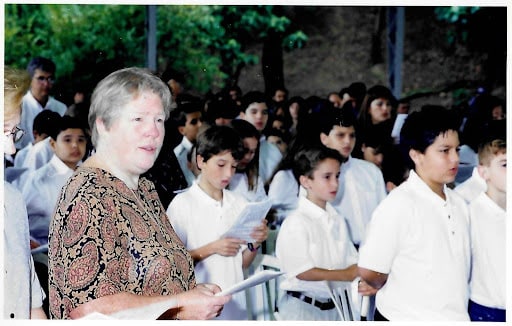
Sister Diane attending first communion with the children at Santa Maria.
Who supported or mentored you along the way? What challenges have you encountered?
The challenge is always figuring out how to get through the limitations of the law to successfully make a difference. Every law in Brazil has an exception. You go after that little tiny exception. The way you go about that is to make friends who can help you with these projects. The challenge is that everything is done with partners. You don’t do anything by yourself. You’re always making friends, you’re always making contacts. Everybody’s important. Many different cultures and people are involved. There’s no simple answer when diversity comes into play.
In terms of mentors, I would say the people who write books and articles. They aren’t my personal mentors, but I find their words inspiring, and everybody I work with personally in some way is a mentor. It’s not one person. It’s a society of learners, researchers, and partners. Your mentors are everybody you work with. You all think differently and have different talents that you can learn from each other.
What moment or experience in your work had a deep impact on you?
I would say coming to Brazil in itself was meaningful and had a deep impact. Though more specifically, I went one weekend with a group of kids. They were all freshmen, and there were approximately 25 of them. We had a ride down for our field trip, but we were going to take the train back. On the train, it was jam-packed, and we couldn’t even get on the train. Suddenly, the kids jumped off the train, and then I had to find a way to jump off while the train was moving. We all had to hitchhike on the highway. We couldn’t look for a place to stay. We didn’t have money. Everybody has their suitcases with them.
Even in the chaos of it all, it was meaningful. I learned a lot about how resilient kids can be when they want to do something. There are no problems that they can’t solve. You just learn to be at ease.
How has your understanding of service and/or justice changed over time?
When I came to Brazil, one of the first things that happened was a discussion: Would the sisters take in people that the police were trying to find to torture or murder? Would we hide them in the convent until the police were so desperate to get them that they would put out an arrest warrant for them rather than kill them? We also would go to prisons or army headquarters, all the places where people disappeared or were being tortured, to help these people in any way we could.
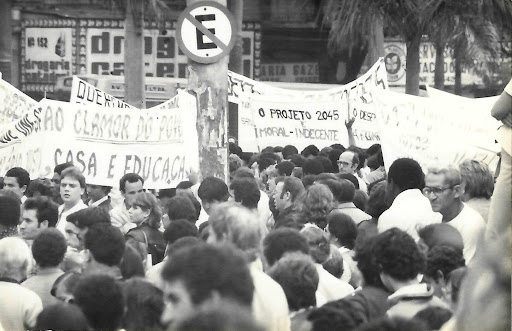
One of the many protests against the corrupt government in São Paulo that Sister Diane has attended.
One man came from France, accompanied by a priest, so he wouldn’t disappear. He had organized unions among workers, and so the police were trying to kill him. He had to get to France to be under the protection of Amnesty International. There was somebody who was shot by the police. He was trying to tell people who were on strike to stop because it was dangerous, and the police came, and they shot him to death.
Justice changed in my eyes when I realized that sometimes, the government itself can be unjust. I learned to always fight for the innocent.
How can those outside your community, especially those in the Global North, support your work?
One thing is to continue to get an education, to continue being involved in problems that young people can be involved in, and to look for solutions. People just stand there and ask, “What can one person do?” Well, one person’s not going to change anything by him or herself, but if a series of people are all striving to make a change, that could do something.
I think that students could have real success in changing and solving problems by the youth getting along, talking to each other, and realizing that we’re all part of the very same family. God the Father doesn’t like his kids fighting with each other; rather, coming together to all find a solution. I think half the problem is when people treat someone badly or with disrespect or without patience. That needs to stop.
There are always so many needs for supporting groups that work with the poor. They always need financial resources, and they always need help of any kind. Even the littlest of support can help.