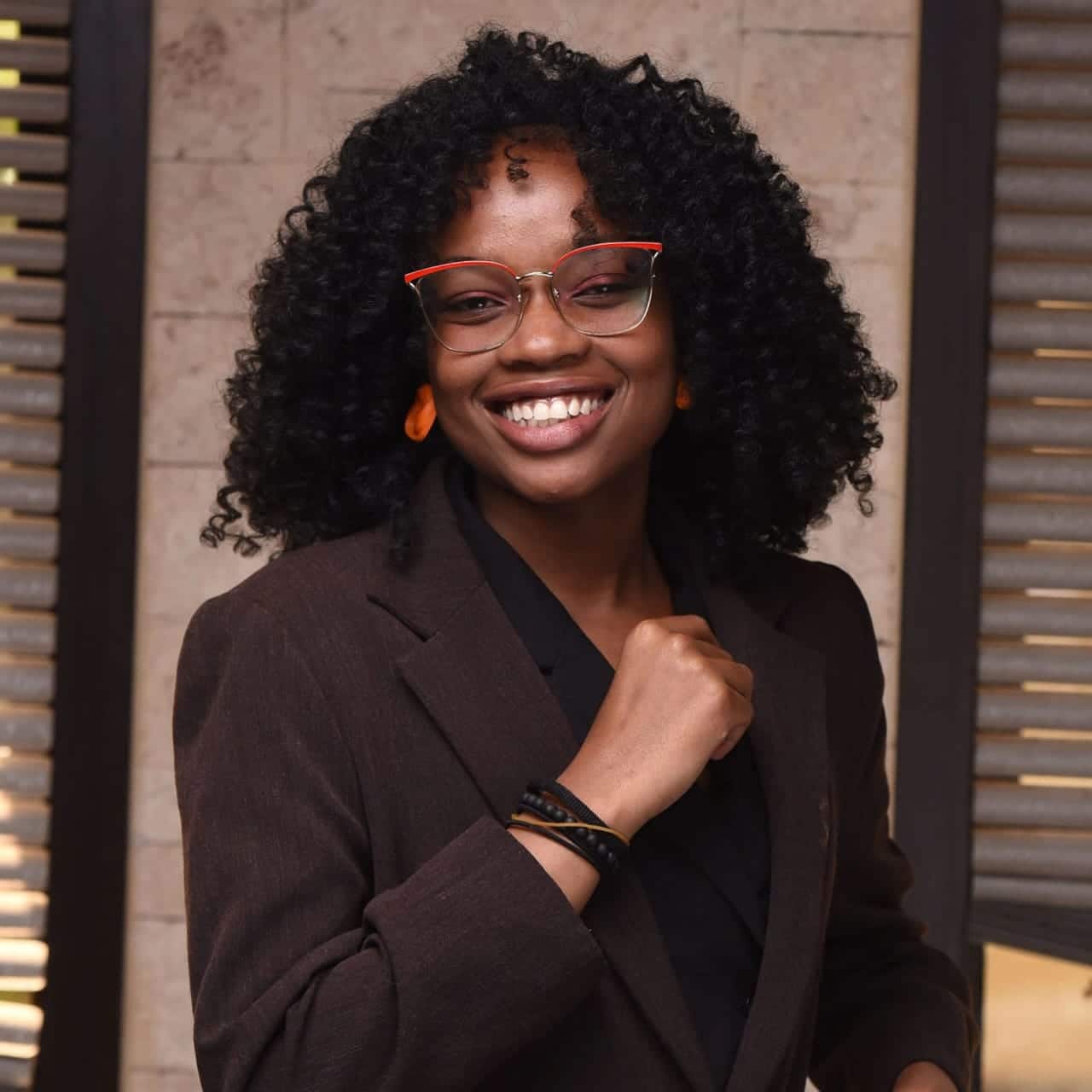
This oral history interview with Malkia John, Founder and Executive Director of Sauti Salama, took place on September 3, 2026. Throughout the interview, Susan Davis (SD), board member of Mama Hope and co-coordinator for the Movement for Community-Led Development US, provided contextual information. She, Dr. Peg Spitzer, and Jannatul Ferdous Chowdhury Bushra served as interviewers. The interview lasted approximately 1 hour and 10 minutes.
How has climate change impacted your community?
When I think about climate change, I reflect on how I experienced it in my own community before I even had the words to name it. I grew up on the border of two semi-arid counties in Kenya, divided by culture. The tribe I came from is a pastoralist community. As we were all living in the same geographical place, we were experiencing the same issues. My first experience with climate change was severe water scarcity. Growing up, we lacked clean water in Nairobi and had to rely on a small seasonal spring, storing water in drums, and purchasing fresh drinking water for 31 to 40 cents USD, which was rationed. We thought this was normal. Electricity only came to my community less than ten years ago, highlighting our energy poverty. At the time, I simply knew something was missing and that I wanted to change it, long before I learned that this was tied to climate change.
When did you first notice this change, and how did it continue?
In our communities, climate change does not exist in our everyday vocabulary; instead, we describe how we experience it through water issues, such as flooding during an El Niño (a natural climate pattern that causes heavy, above-normal rainfall and severe flooding) event when I was very young, or the droughts are now longer, right? Beyond that single early El Niño, we did not experience extreme climate shifts back then. I first noticed climate change simply as fragmented community patterns: severe water scarcity, energy poverty, and the time poverty experienced by women and girls who had to walk increasingly long distances to gather natural resources for their families. I noticed when the climate crisis intensifies, women and girls suffer the most as they are the ones looking for natural resources for their community.
As the climate crisis intensified both globally and locally, these burdens grew. After high school, I wanted to learn how to change these broken systems, which led me to ask for the most challenging degree path and choose electrical engineering to prove that women could do it. Later in life, I was able to connect my childhood experiences of water security and energy poverty to larger global questions of adaptation, climate justice, and gender justice.
What are you most worried about when it comes to future impacts?
I worry that as climate change worsens, it multiplies existing social inequalities. Here we are also talking about even geographical inequalities. Look at the difference between Global South and Global North. For social inequalities, women and girls who already face inequality even before the climate change bear the heaviest burden. Women already face systemic inequality, so when water becomes scarce, it causes time poverty, lost income, interrupted education for girls, health impacts, and an increased burden of unpaid care work.
In semi-arid pastoralist communities, climate stress forces families into desperate measures. For example, during severe droughts, families losing livestock often resorted to early child marriage as a means of survival. Fewer than 10% of the girls in my primary school class completed grade eight. Our research across two counties shows a strong link between climate stress, unpaid care burdens, and increased gender-based violence (GBV). When women spend all their time fetching resources, they are systematically excluded from governance and the economy. While policymakers treat water, health, economic security, and GBV as separate issues, they are deeply interconnected parts of a single failing system.
However, rural communities are not passive victims. Local communities possess immense knowledge and are already actively adapting. The real concern for the future is whether external funding and decision-making authority will ever genuinely reach the communities experiencing these impacts.
Susan Davis (SD): Can you tell us about your work and how you got started?
My entry into social impact work began in my third year of electrical engineering at the University of Nairobi, where I got into school politics. There were no women engaging in politics in the engineering school, so I ran for major leadership seats. I lost the election, but that became my turning point. It pulled me into social impact work focused on women’s representation in leadership. Through that network, I volunteered as a university representative for a coalition supporting survivors of sexual violence in Kenya. When I graduated in 2023, while everyone else was job hunting, I already knew my heart was in working with women. I used to joke that I’d only practice traditional engineering if the projects were directly for women!
That same year, we founded Sauti Salama. Coming off my ground experience helping survivors access support, I asked, “Technology is advancing for everyone, but why isn’t it advancing for gender-based violence (GBV) survivors trying to access safety?” We entered a hackathon, won it, and built Sauti Salama as a digital platform for survivors to report incidents and receive immediate help from a trusted network of service providers across Kenya’s 47 counties.
From there, we started applying systems thinking, looking at how GBV connects to economic security and climate change. In 2024, we submitted a proposal to the Climate and Care Initiative by IDRC (International Development Research Centre). There isn’t much existing research on the nexus between GBV, climate change, and care work, so we secured funding to work in two semi-arid communities: Isiolo and my own home community. In these communities, we look at energy poverty and how providing safe solar lighting reduces GBV risks for women at night so they don’t have to venture into the dark for lighting or firewood. But when I first sat down with the women in Kitui during our baseline survey and told them I brought solar lights, they looked at me and said, “Our real problem is water. If you solve water [problems] for us, you solve a lot of issues.” I didn’t have water funding right then, but I promised I’d find it.
Through a fellowship award, I launched Q, an initiative to increase water access and affordability in my community, where people were paying a ridiculous 40 cents USD for 20 liters. We are currently conducting surveys to drill a solar-powered borehole. On top of that, we train local “community captains” (proactive figures like village elders), who serve as grassroots anchors to identify GBV cases and connect survivors to immediate care through local networks.
How do you find the community captains?
Because I come from my own community, it was very easy to identify captains there. They are typically respected figures like village elders, people who are naturally the first to hear about issues in the community and are proactive about referring cases.
For communities where I am not a local, such as Isiolo, we partner directly with established community organizations on the ground. We work through their networks to identify and onboard community captains. In every location, we look for existing local networks and NGOs so we can collaborate. Working together is essential, especially with reduced funding. It forces us to innovate and combine our efforts.
Could you talk a little bit more about your educational background?
Throughout my childhood, my career goals shifted constantly. In primary school, I wanted to be the president of the academy. In high school, I wanted to be a lawyer and then a cardiologist. I wanted to become everything and conquer the world.
The defining moment came after high school when I was deciding on a university path. Before main-grid power reached my community, my father bought a solar-powered TV set with free-to-air channels. I was given the sole responsibility of manually scanning satellite frequencies and tuning channels, which made me realize how much I enjoyed tackling technical problems. Driven by a desire to challenge societal norms and prove that women could succeed in the hardest disciplines, I chose electrical engineering, which was the most demanding path.
Choosing electrical engineering was a way to challenge myself, but it fundamentally taught me how to think in terms of systems. It taught me how to diagnose system failures, bring separate components together, and redesign broken structures. I apply that exact framework to social and political systems today. My engineering background also directly powers my current technical initiatives. Having interned as a solar water engineer, I hold the technical expertise needed to direct hydrogeological surveyors and drilling teams for our community borehole project, ensuring technical execution aligns with local needs.
SD: So, you told us you grew up on the border of 2 counties. Can you describe what life was like where you grew up?
I grew up in a town along the main highway connecting Nairobi and Mombasa. Because of its position along the main transport route, the town center had more commercial activity, but as you moved further out toward the railway line, it became extremely remote. That area remains without electricity to this day. When I was born, my mother ran a small kiosk lit by a blue hurricane lamp. After she closed shop for the evening, I would complete my school homework by the light of that same lamp. Like many African communities, life was close-knit, warm, and neighbors regularly shared resources like salt and supported one another.
However, life was defined by severe resource constraints. Water was a daily struggle; my mother had to walk long distances to fetch water from a seasonal river. Economic activity was severely limited because businesses could not stay open past 6:00 PM or 7:00 PM without affordable lighting. Paraffin for lamps was expensive, so if a shop owner couldn’t afford it, they simply had to close. Agriculture was equally unfeasible because there was no water for irrigation. Despite these hardships, my parents managed to put us through school. Although we didn’t use formal terms like “resilience” back then, my earliest understanding of the word came from watching my mother navigate those daily struggles and keep our household alive.
SD You have won some awards. Tell us more about your awards.
Yes, I have won some awards for Sauti Salama and others for personal recognition. Last year, Sauti Salama won the Young Innovators Award at the World Summit Awards in Vienna. I was also named an International Telecommunication Union (ITU) Gender Champion, and I received the Professor Karanja Award from the Bioreproductive Health Network for my work in innovation. As a fellow with the Be Visionaires Mercedes-Benz Fellowship, I received the Pioneer Award, which directly provided the financial backing for me to launch our community water project. Beyond these, there are various unexpected recognitions on platforms like LinkedIn. While these honors bring recognition rather than large sums of money, I hope they help open doors for future support.
How are you part of the community that you serve?
To be transparent, while my family belongs to the same ethnic group across the region, my parents recently moved from Makueni, the more urbanized area along the highway where I was born and raised, to our ancestral home in a more remote village. I used to visit this village periodically for holidays or to see my grandmother before she passed away, but this past year is the first time I have spent significant, continuous time living directly in the community where I implement my work.
The community has welcomed me warmly, noting that I am one of the few women who gained an education and returned to give back rather than leaving permanently. The people I serve are literally my aunties, uncles, and neighbors. Because I am a trusted insider, local partners, like churches, provide free venue space and support us immediately without expecting anything in return. Being rooted here builds authentic local ownership; when community members see you belong, they take pride in the projects, ensuring initiatives like our borehole move forward without local political conflicts.
SD: I know you’re part of the Mama Hope program but tell us more about what kind of support has been useful to you. Who are some of the role models, networks, or mentors who have supported your journey?
My story begins with my mother. Watching her navigate hardship with grace to educate my siblings and me has been my greatest inspiration. Beyond my family, mentors have been critical because the founder’s journey, especially for a young person, is deeply lonely. Mentorship through Mama Hope and my mentor, Susan, provided a crucial space to vent and helped unlock tangible resources through their networks. Finally, I learn directly from the women in our communities. I dislike using the word “beneficiaries” because these women are equal co-creators. My strongest understandings of climate adaptation and care work come directly from sitting with these women, listening to them, and watching how they navigate their daily lives.
SD: Beyond capacity building or technical support, what is the most useful form of support for local founders?
While funding is central, the most important form of support is trust, trusting that young founders in the Global South can and are doing the work. Donors and accelerators often rely on big institutional language and rigid frameworks for documentation, which disadvantages young leaders who are actively on the ground. Many of us have uprooted our lives to move directly into our communities to do this work, yet we are constantly asked for excessive evidence and formal proof.
While I recognize that funders have been burned in the past, we need to revise how we define documentation and proof of work. In our communities, knowledge and data have historically been kept through oral traditions, like oral histories passed down from our grandmothers. Global standards should adopt a mixed-method approach. If evaluation metrics only value an organization that has managed a $300,000 budget, it completely ignores the immense value of leaders who fund work out of their own pockets to serve their communities.
What are the primary challenges you have encountered in your work?
One of our greatest challenges is navigating the bias against young leaders. In social impact, authority is often tied to age, institutional size, and formal credentials. Young founders continuously must prove that they hold valid community knowledge. At the same time, community work in remote areas is logistically complex. Most NGOs cluster in major cities, leaving rural villages underserved. Operating in remote communities means dealing with difficult transportation, supplier delays, and scheduling around community members who cannot afford to lose daily income from their small businesses (kibandas) to attend training sessions. Climate disruptions also frequently cause implementation delays.
Funding structure presents another massive hurdle. Climate funding is heavily project-oriented, offering short 12-month grants for “adaptability” rather than investing in the long-term infrastructure and operational support that communities need. Furthermore, local government departments operate in silos, making it difficult to align county budgets across different ministries to solve interconnected problems like safety, energy, and water access.
Finally, as a founder, carrying this work with limited resources leads to personal exhaustion. Balancing continuous fundraising and community implementation without formal operational funding makes it extremely difficult to maintain personal rest and health.
How can the international community, particularly supporters in the Global North, best assist your work?
First, we need flexible and long-term funding. While we have worked for years without money, relying entirely on volunteers is exhausting and unfair. Social impact work should not be treated merely as unpaid missionary work; driving systemic change requires real financial resources. Funders must move away from short-term project grants and invest in long-term institutional structures, administrative capacity, and fair salaries for the people doing the work.
Second, funders need to trust local knowledge and listen to what communities want. For example, when we had a project to teach women how to assemble solar lanterns, the women told us that wasn’t their priority. They wanted to learn how to save money and invest in small businesses through local savings groups. Instead of forcing “new innovations” or pre-packaged ideas, funders should invest in basic needs like water and energy. Community members are experts, not just research subjects, and they should be paid for their time.
Finally, local leaders need a real seat at the decision-making table. It is not enough to take a story from a rural woman and share it on a panel at a big international climate conference like COP. The people who live with the impacts of climate change must have real power and influence over the decisions being made for them.
How are you helping your community overcome barriers like water scarcity and gender-based violence?
In our project communities, we are tackling these challenges through a few key initiatives. First, we are drilling a solar-powered borehole to establish a consistent water supply, which will be only the second borehole serving our area. Right now, families rely on diesel water trucks, which makes getting clean water far too expensive. Second, we are expanding access to safe lighting. We have already installed solar lights in over 200 households across both communities. Before the central electrical grid ever reaches these remote areas, solar power offers an immediate solution. On my very first day delivering lights, I saw a young girl using her new lamp to do her homework, which was incredibly heartwarming.
Beyond immediate infrastructure, we also help community members access broader economic resources. For example, county government programs like the World Bank’s FLLoCA (Financing Locally Led Climate Action) climate adaptation fund has money available, but local officials often struggle to find eligible applicants. Because beekeeping is the primary source of income in our dry region, we help local entrepreneurs present their work as climate adaptation so they can secure these funds and grow their businesses. On top of that, we regularly visit local schools to mentor young girls. While our central focus remains safety for women and addressing gender-based violence, we connect all our work directly to climate resilience and community support.
Thank you, Malkia. This is very inspiring, and we really appreciate it. We are deeply grateful to you for your inspiring leadership and for giving us an honest look at the heavy physical, financial, and emotional weight of this work. We will work hard on your behalf to share these oral histories with the world. We are in awe of your dedication to your community, and we thank you.