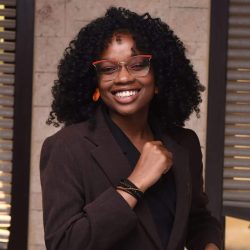

This oral history interview with Naw Yen Poe, a specialist in bird species in the Women’s Research Group (WRG), took place on September 17, 2025. Throughout the interview, program manager Naw Moo Moo of the WRG’s umbrella organization, the Karen Environmental and Social Action Network (KESAN), translated and provided detailed contextual interpretations. Peg Spitzer and Emily Christoff were the interviewers. The interview lasted approximately 58 minutes.
How has climate change impacted your community?
The impacts are growing year after year. Many households have lost their rice fields and farmlands due to flood and unsustainable weather. The weather has changed all the time. When the people lost the rice field, it’s hard for them to feed the family. It’s very difficult for them to survive. In 2024, we also had a lot of communities affected by the flooding. All the rice was gone because of the high water. They lost everything.
Now that the weather is changing, the hot season is longer than the winter, and the rain is longer than any other season. It’s very hard for the community to do farming. I’ll grow some vegetables in my home garden because the weather is changing all the time. It also affects the wildlife. Birds cannot find food. We will lose wildlife species.
What do you think the future will look like as regarding climate change and how the community is affected? And then along with that, can Yen talk about the size of the community? How many people are we talking about that are affecting the community?
Over the long term and in the future, we will lose the forest, and we won’t have much water for the community to consume, maybe also for the wildlife. With no water for the community to drink, we won’t have the delicious tea that the whole community drinks. One example is a small village in KNLA Brigade 5 (or Mutraw District). But actually, it’s not just one village but whole communities in the Karen State that are affected. I mean, there are between 300 and 400 households in Karen State.
What about potable water? Could you talk about the water system?
Mostly, the community drinks the water directly from the forest.
Could you describe your work and how she became involved in the WRG?
As part of the WRG, my main responsibility is the community’s biodiversity, especially birds. I decided to join the research group because I realized that no one had yet documented the biodiversity in our area, in the village. At that time, there’s not much active restoration work in that village. I thought that maybe I should start doing something or join the community research group so that I can contribute something meaningful to the community, to our current people. I have been working with the WRG for almost five years.
Could you explain why birds in your region are important to the ecosystem?
Because some bird species will become extinct soon, we must do the research and try to protect them. This is very important to the local community because some people use birds (we call “kobuhana”) for a ceremony. They perform this ceremony for harvesting. They need that species of bird – to feed that bird – because they believe that if they feed that bird, everything will go well. That the community will make a lot of food for the next coming year. It’s not only about protecting the birds, which will be extinct soon, but also that the community relies on those birds and other animal species to perform the harvest ceremony. They grow up with the birds and animals, and they live together with them.
If there’s a sign of a specific bird migrating, is that a sign that the weather patterns are changing and that it’s time to harvest? Is that another component, that it’s also an indicator of timing?
Yes. You are right. Because they also have some birds that indicate the weather and when it’s time for the community to start harvesting. I think they also have those different species.
It’s very important to start doing the research and documenting those species. Because before, the community did not have any regulations or laws that protect specific animal species. A lot of people were hunting because we don’t have community regulations to protect the animals. But we can see the change after we started documenting species. Also, after we published our book and identified which species will be extinct and need urgent protection, things began to change. This is very important because we live along with the forest, with the wildlife. We rely on those animals. I grew up with those species and it’s very important to protect them. If we do not act now, the next generation will not have the opportunity to see some species.
What is your educational background? And then another part of it was, where did you grow up? And are you part of the community that you are in now?
I graduated from junior college in Karen state. After that, I joined the WRG. I grew up in the community, and I continue to live and work here.
How old are you? Are you married and/or do you have children?
I’m 29. I got married four months ago and I don’t have any children yet. I live with my mother and sister.
Can you talk about different mentors or people from your childhood? Did you have teachers who supported you or other people in your community or your elders. In other words, who helped you along the way to develop your interest and your commitment to this work that is so valuable?
Our (Western-trained) consultant was very important again. He’s the one who encouraged me to study in the junior college. After I graduated, he asked if I wanted to join the research group. Also, the local community encouraged me — elders are very important to me because they support me in my work. They support the WRG and they always inspire the young people and particularly the young women the work of protecting the biodiversity and protecting the forest.
When you mean the community people, does that mean the elders, or does that mean people who work for the government? Who are those people?
Mainly there will be community elders who have a lot of knowledge about biodiversity and the species. Every time we conduct the research, the elders will accompany the WRG. They will share the knowledge with the young women during the research. Those community elders are very important to me and inspire me a lot to do this job.
What is your role when it comes to your daily life? Are you harvesting the land or how connected are you to farming and other things like that? Why is it so important for women to do this work?
For the research, from my perspective, men can also do the research. But at some point, the men don’t understand every species’ names. Men and women must work together. The women are mostly responsible for feeding the family. They collect the vegetables. They produce herbal medicines for the family, and for their children. As a result, women tend to have more knowledge about plants than men. Even so, I still value men. We must rely on them to support us. Women can do their work effectively when men support them.
In the five years that you’ve been working with the WRG, what challenges have you encountered? Or problems — different things that you really had to overcome or deal with in this work.
Mostly the challenges for the woman are limited access to dangerous places like caves. We can’t go inside and we need to rely on men to do that. Also, to do research (like documenting the orchid species), someone needs to climb to the tops of trees, and we rely on men to do that.
Another challenge is funding. Even if we don’t have funding, we still do our job, but it’s very challenging. Sometimes we must walk 50 or 40 kilometers to get to the field sites. If we have funding, sometimes we can take the motorbike halfway, and then we can walk after that. There are a lot of challenges. Also, because of landmines and old army camps, it’s very risky for women to conduct the research. Because we have local leaders, authorities, and the local Kawthoolei Forestry Department (KRD), they help us by leading the research team, so we can document the species.
What does a typical day look like for you?
When I wake up in the morning, I cook for the family and then go to the fields. Along the way, if I see some interesting animals or plants, I will take out my mobile phone and document what I see. Mostly, I work from Monday to Saturday and then take a rest on Sunday.
I wondered what is involved in the work. For example, you see a bird and you take a beautiful picture of it, and then you do research on it, and then you put it in a catalog. Is that the work, or is there other work that’s involved with the women’s research group? Is it mostly data collection?
It is mostly data collection. When I see an animal species or plant species, I will document it by taking a picture and then writing down the names. If I don’t know the name, I will take the picture to the local community to help identify it. We have a Western-trained consultant but I collect the information.
How does Yen see her future – next steps in her work?
I would like to publish a book on bird species to share that knowledge with future generations. When we have a book, young people can read it. In addition, I want to train other young people who are interested in doing research. Maybe I can conduct a training workshop to give them knowledge about the birds. This is very important for me… to share knowledge with the next generation.
What are Yen’s other talents?
I can’t draw or sketch, but I can read very well. I even know Karen poems and can recite them to young people. It’s very difficult to translate these poems into English but they have a lot of feeling in them about nature and the environment.
How do you think the outside world, especially those of us in the Global North, could best support the work that you’re doing?
I would like funding to be able to publish books on bird and fish species to share with my community and the outside world. Maybe these resources can inspire others to support their work in terms of funding and sharing information.
Training and capacity building for the community are very important. Before I joined the WRG, I didn’t have the confidence to do this work. But after I joined and was trained by our outside consultant, I have more confidence to do my job.
If the WRG has more opportunities to do research for the community – even learning data collection skills – this is very important. This can be a form of advocacy, or knowledge sharing that can make her or the team feel more confident. [maybe “empowered” is a good word here].
We also need better forms of transportation like motorbikes because we don’t have roads for a car in these areas. The roads are very small. And we could use a boat because sometimes we must travel into Thailand and then back into Myanmar to access the restoration site.
I think mostly we need transportation because of the distance and the extremely hot weather. It’s not easy to walk many, many hours. But in the rainy season, we must walk because it’s not possible to take the motorbike because the road is very slippery and there are no drivers.