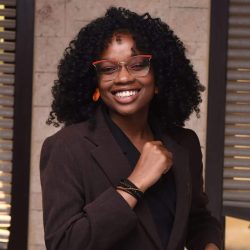
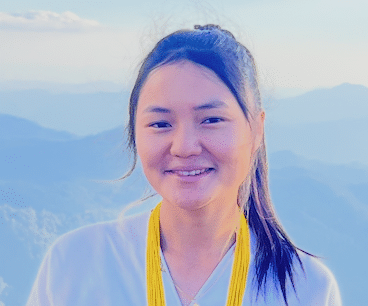
This oral history interview with Naw Kenralel Moo of the Women’s Research Group (WRG) took place on September 8, 2025. Throughout the interview, program manager Naw Moo Moo of the WRG’s umbrella organization, the Karen Environmental and Social Action Network (KESAN), provided detailed contextual interpretations and translations. Susan Hinely and Peg Spitzer were the primary interviewers; Emily Christoff and Jamie Sommer were observers. The interview lasted approximately 53 minutes.
How has climate change impacted your community?
Kenralel Moo: Climate change has caused irregular rainfall. In addition, there is a lack of food because insects have destroyed the crops. The irregularity is creating havoc for farming communities.
When did you first notice this change?
Kenralel Moo: The weather has changed within the last few years. It’s getting worse every year. And people are cutting down more trees than ever before.
What do you think the future impacts might be with this irregular rainfall and other increasing infestation of pests and other things related to climate change? And how do you see the future given those changes?
Kenralel Moo: Many people are in very difficult conditions. They are struggling to find rice to eat. In the future, I think that if we don’t protect their environment, we will be struggling. But if we can preserve nature and the environment, things will be better and we can deal with the food security problem.
Can you describe your work a little bit? What do you do and how did you become involved to alleviate the environmental problems?
Kenralel Moo: I’m working with local people to address biodiversity. Every year, we make at least three field visits in the Salween Peace Park to assess changes in biodiversity species.
How did you become involved in this? How did you begin this work? What was your motivation?
Kenralel Moo: When I was young, I saw how one of our research leaders and his team members were active in my community. He came to the village one day when I was still in school and I slowly got to understand that biodiversity is important for my community. After I finished my education, I decided to work with the WRG.
May I ask how old you are and when you became involved in KESAN?
Kenralel Moo: I am 26. I began working for and committed to KESAN three years ago when I was 23.
Did you grow up in the area that you’re in now? What was your schooling like before you began to do this work at age 23? Could you describe a little bit more about your background, including your education?
Kenralel Moo: I am part of the community where I live now. I grew up here and studied here until I went to college in the city, Naypyidaw (check this?) in Myanmar. I wanted to study nursing, but they didn’t have a program in that, so I took a degree in general education and studied to be a health care manager. But then, because Indigenous people in my community do not know how to read or write, I decided that I could work to try to protect the environment, especially our rivers. Now we have a lot of fish conservation and a community forest to protect.
Moo Moo: Because of climate change, our forest can be destroyed by massive floods. Kenralel thinks KESAN’s work is very important to help our forests. They do conservation, fish research by documenting and recording plant and animal species. I think those are very important because if we do not start doing the documentation or recording those species, maybe one day we will lose them as climate change gets worse.
By documenting those species, we map the forest and the community – territories, land, and forest. We must either clear the forest so that the community can harvest food or preserve the natural habitat. Those are the findings from KESAN’s work. The whole community is involved in this work.
How did you learn the skills to do this mapping for the WRG? Where did you learn how to document this and to record the different areas?
Moo Moo: We have a consultant Saw Blaw Htoo. He’s from Karen state – the same area as our WRG – but he moved to Canada. He tries to come back every year, to visit and train us.
In our documentation process or research method, we use both scientific methods and Indigenous traditional knowledge. We combine these methods. And for mapping, Saw Blaw Htoo trains our WRG on how to map locations, the forest, or the river, the farmland, and everything. We also work together with the local community, the KFD (Kawthoolei Forestry Department) to document and map forests in our area.
Can you tell a little bit about how long you think you’ll be doing this work?
Kenralel Moo: I’m not sure but maybe five years.
Can you talk about different mentors or people from your childhood, or maybe college professors or others, aside from the person from Canada who trained you? Who helped you along the way decide to get into this field?
Kenralel Moo: I think local community people. Because of the local community people, we can do this work. Also, the KESAN organization provides a budget so that we can finish our work. In this career and with my community, I have learned to love to preserve our natural resources.
Do you have parents or siblings, brothers or sisters that are doing this work as well, or aunties, or anybody in your family that’s supporting you in this work?
Kenralel Moo: Yes, my father.
Also, when you started to do this work, what were some of the challenges that you encountered? What were some of the problems or issues that you had to overcome to do the work that you’re doing?
Kenralel Moo: When we were in the rainy season, if we had to go to document a species, we had to do this in good or bad weather. It’s a challenge. Sometimes we also need to invite the men and local people, but the local people often don’t have time. We also don’t have enough budget to give them to support us.
How do you think the outside world, especially those of us in the Global North, could best support the work that you’re doing?
Kenralel Moo: I hope we can join to protect and promote the rights of Indigenous people so we can be treated with equality and justice. Sometimes, those in the Global North can share their different knowledge with us about how to preserve the environment and how to prevent the impact of climate change. I think we can share their different knowledge with us.
Does your group have outside support outside of Myanmar, or is it pretty much a very local, concentrated effort?
Moo Moo: We’re more concentrated in the current state, in the Salween Peace Park in the Karen state. We have been doing conservation research in terms of documenting and recording species. I think those are valuable to all of Myanmar because there are a lot of endemic species that need to be preserved and conserved. By documenting these species, we also preserve Myanmar’s valuable resources.
However, for the community’s livelihood, we focus on the farmland. After we do the research, we produce publications with conservation guidelines. I think this is very important, not only from Karen state but also other ethnic groups who live in Myanmar. Maybe they will realize that those animals, insects, and flora and fauna exist – that in the country of Myanmar, they need to be preserved or documented.
Were you involved in the orchid documentation? Were you part of that project?
Kenralel Moo: Yes.
Are you planning of publishing other summaries of your documentation?
Moo Moo: Now we are doing the fish research on ethnobotany, which we will publish soon. All this research was done by the WRG with local community support and contributions.
So about how many people are in the WRG?
Moo Moo: In the local KFD, we have 10 or 11. But there are five WRGs. We have another member, who was trying to access the internet and join us, but I think it’s hard for her right now. Maybe she cannot make it today.
Another one leads the tree nursery. We have a local plant nursery garden, where one of our WRG members collects and takes care of local plants and seeds. And we have two other members, but it is very hard for them to access the internet. And we also have an elderly woman (around 50 or 60) who always joins the research group because she has a lot of knowledge. She’s like a mother to us. She shares her knowledge with her “daughters.” We also have some men who join us in doing the research.
We also encourage the community. For example, the community does seasonal fishing. There are strict rules on when people can fish – not during breeding time. In the local community, we promote friendly fishing methods that do not use electricity. And we try to encourage local women to collect, save, and share seeds for planting with their neighbors.
Do you meet resistance from folks who don’t want to change their ways of fishing, perhaps, or planting?
Kenralel Moo: Yes, we do have a problem in the fish breeding season. But we work with local organizations.
Moo Moo: We have local KFD or Karen Forestry Department. We have local leaders who are not part of the KFD. In the Southern Peace Park, we have 15 communities. Our supporters include local leaders, schoolteachers, and students. Every time we implement an activity, they are involved. First, our WRG has a local consultation before we implement any activity. We inform the community and local authorities. The big governance is driven by the Karen National Union (KNU). We include the male leaders: Everyone involved before we implement something.
Do you have to get permission before you are able to do your work?
Moo Moo: Yes. Every time before we implement something and after the official consultation, we must write a letter to inform the KFD about our travel plans to implement activity in specific areas. This is particularly important during a military crisis. The KFD is concerned about our security in a conflict zone. There may be an air raid by the Burmese military, or a bombing. That’s why we need to write the letter to inform local authorities, so the team will be able to travel to those areas. The KFD needs to know the roads we will travel and the size of our research group to make sure that with the group, we’re able to travel safely without any issue. We need to rely on the local people and local authorities.
That must be quite challenging…
Moo Moo: Yes. There are a lot of challenges. And the distance is very far. During the rainy season, it takes three or two days to travel to the restoration site to conduct our research. We must take bikes and sometimes we must walk and carry our bags one whole day without any transportation.
I am sharing my perspective because I joined the WRG for almost three years. The first time that I went to the Karen state and joined them for the research, I thought it was very hard for me to be part of this because of the challenges – such as the long travel distances and the need to avoid military conflicts. As we are women, it’s not easy. You must sleep in the forest; you must eat in the forest. You must be surrounded by the local men. But at least we can trust them. Sometimes the women walk 50 kilometers per day. I think they need to walk fast, and I think they’re very tired. These things are very challenging, and I appreciate that a lot.
Are there any environmental groups outside of Karen, in Myanmar, that have the same goals as you do, but because of the military conflict, you can’t work together?
Moo Moo: We are part of a network with other ethnic groups, like Kachin and Shan. They also have women research groups. Sometimes we organize a workshop or training or the conference together, but we cannot work together because of the military conflicts. At least we choose representatives from each group to share what we are doing. We can share our publications/books with each other. I think this is very powerful and has inspired us because we don’t have to wait for the government to do something. We can start things on our own. I mean, local people can do it themselves. Indigenous people, they can support each other.
Also, maybe in the future we can share with you our work on a plant nursery, which is led by Naw Paw Tha. They implement the native plant activities with the Wunme [sp] research group. They collect the seeds with the local community and include children and students in the communities. Maybe we can share our report to all of you soon.
You talked about the research method that you’re using that’s combined with a traditional scientific research method and incorporating Indigenous knowledge. Could we learn more about that?
Kenralel Moo: Yes. We combine the scientific method and local knowledge. We have the local leader], who uses current traditional knowledge and identifies different plant species for herbal medicine or maybe for food. And we also have a blog tool. And sometimes we ask a professor from a university in Thailand or maybe in Canada to help us identify the name of the species. We also have a website to identify those species (by ACN National). I can share the resources with you, including their previous book publication.
We collect the information, write down the local names, and then ask the community to help us with identification – which species they use for food, which ones are poisonous, and which one may be used as medicine as household items. Once we gather all that information from the community, we then look at the official plant species tables to find scientific names. In this way, we conduct research by using traditional knowledge and wisdom. We also use TAF measurements.
We are indebted to you, Kenralel. Thank you so much for your incredible efforts and explaining how difficult this task is, not just physically, but I would think, psychologically, given the danger involved. We are in awe of you, and we thank you.