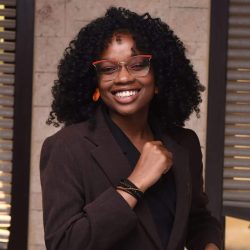
This oral history interview took place on May 10, 2024, at 10:30 am. It was conducted by Peg Spitzer and Karina Yager. While there was some difficulty with the internet, the Zoom recording was one hour and nine minutes.
How has climate change impacted you and your community? When did you first notice that? And how did it continue? What do you think the future impacts will be?
Yes. My name is Naiyan and I am the executive director of the Paran Women’s Group,[1] an organization that started in 2005. It has 64 women groups (3,700 women) who have come together to address challenges around climate change and gender equality. Specifically, we advocate for climate change and gender equality through restoration and conservation: That is our main work.
When I talk about the question on how climate change impacted me and the community, climate change has brought a lot of impacts, especially in the community. And the people who are mostly affected are indigenous women and girls. They have endured a lot of challenges that inspired the Paran Women’s Group to come together, talk together, and decide what to do, so that they can save the livelihoods of the indigenous women and girls.
I am working with two communities which are the Maasai community and the Ogiek community which are minority communities in Kenya. These two communities depend on land, and we know when climate change actually occurred, the lands are degraded, and most of them depend on land, and when I say, most of them depend on land, I mean others are farmers, hunters and gatherers for the Ogiek and the Maasai, who are pastoralists. Because they mostly depend on this land, when climate change came they had to remain vulnerable, because they especially used it to depend on wild animals, maybe for food they depend on like honey in the forest and wild fruits.
When climate change came, everything was cleared, and they remained vulnerable. Even the pastoralists, the Maasai communities, depend on their animals and their animals now were affected by climate change because there were no pastures for their animals. They had to move from place to place, and those were men. They leave women behind, and the women remain with the children at home, and when they remain with children at home they have nothing to eat. They have nothing to give the children. In most cases, we saw that girls were mostly affected because they had to drop out of school and had early pregnancies. Most of them were getting married when they were very young, at 12 or 13 years old, even 9, sometimes of which it is not normal because poverty was in high rate that they could seek support from motorbike boys and men.
When we saw all these things, we realized that it was good for us as indigenous women to come together and look for a complete solution that can help us. That’s when we formed the Paran Women’s Group. We say that in this Paran Women’s Group we want to talk to each other because each and every woman has the same challenges. When we sit together and decide what to do, maybe we can save somebody, and maybe even our girls can continue with their schools. That’s when we sat down and decided on income generating activities because we saw that most of the women in their homes are vulnerable and poor. The women decided on the activities that they can get some small money inside their pockets to assist the girls and also food security. When we visited one school we found that all the girls were pregnant!
It was in the year 2005 when I realized that climate change has come. In 2005, 2009, and 2010, it was worse, because there was no food, not even vegetables. A long time ago there were vegetables everywhere, because, as we are living near the forest. Vegetables were everywhere while fruits were there, and we saw that it was affecting us because no food was accessed, and the waters in the rivers were dirty. And there were a lot of diseases affecting children and women because their bodies were not accessing clean water. They were not even accessing indigenous vegetables to get nutrients. Most of the children were getting poor growth There was no food, and no fruits in the forest to collect and eat.
What do you think the future impacts will be? Where do you think climate change is? How is it getting worse for your communities every year, or where do you see the future? How do you see the future in relation to climate change?
From 2005, when we started to work, especially to plant trees, we decided women can bring back our environment just the way it was a long time ago. We advised ourselves to establish tree nurseries, indigenous trees which have no retreats, and that these trees cannot be destroyed by anybody. During those days, we advised ourselves that we are the ones who must first start working so that others can learn from us because we are the first care takers of our land. What we did is that every woman must plant 100 tree indigenous, medicinal and fruit seedlings in her home when they have group meetings at their homes. That worked! In the year 2009 and 2010 everywhere now is forested. That time you could just point to somebody’s home and say, “Now everywhere is forested.”
A house for somebody that was once bare now is green. We have a good environment, and even the waters in the rivers have increased because we decided to restore the riverbanks by planting the bamboo which actually sieves the water and reduces soil from drowning or from landslides.
So for now what else? Because even now, today in Kenya, we have the national tree planting that is why I was a bit late – We managed to plant like a hundred thousand seedlings today with the help of Paran Women’s Groups plus the [local] county government from Narok[2] and other stakeholders. Everybody now is doing this work because they have seen that it brings good impacts. And we continue to advise people to bring everybody on board. We work together. And because we are telling people, yes, we have a target of 15 billion trees in Kenya now by 2032.
But we are telling people that it is not the only target that we have. We also want in the future to have an environment whereby all living creatures can live in harmony with nature, and even our future can change, even if it cannot change now. But we know that the process of acting right from the beginning and bringing everybody on board without leaving no one behind we can change the future.
That’s amazing. How many women do you work with?
64 women groups, but it has already increased. Now we are almost 70. I have, like 3,725 women.
And how do we manage these women? We have resource centers in every county whereby we have 25 groups coming together so that they can easily reach each other. In the resource center, they can demonstrate conservation activities, like tree planting, tree nurseries, briquette making, energy saving cookstoves, kitchen gardens, beekeeping, beadwork and poultry keeping.
Briquette making—that is the modern charcoal whereby the women use waste products to make charcoal. And we have 17 resource centers within Kenya, whereby women can easily teach and learn, and even other people, other stakeholders can come and learn from these resource centers.
It sounds like women are really the core of the community. Is that correct?
Yes, it is. It is difficult, because we are in the committees in our county, whereby the government cannot do anything without including the Paran Women’s Group, because we are the advisory committee board.
Could you describe your work? How did you become involved? How did you get inspired to work on that?
Okay, on how I got inspired about this work of climate change is because in our community I was elected as a village elder. So, when I was a village elder, I had to attend a lot of meetings talking about climate change. This is where I knew that climate change is changing our lives. It is changing the lives of indigenous women and girls, and that is how I came about and continued with it. I said, Yes, because I wanted to tell the rest of the women to know that climate change is here with us, and we must look for adaptations and mitigations to continue our livelihoods.
How did you learn about the right trees to plant? How did you choose the plants and trees to plant?
Yes, what made us to know about the trees is because our forest is indigenous, including other exotic trees, which were inside the forest. We noticed that the exotic trees were destroyed. They cannot fell the indigenous trees and do anything because they are not straight for logging With so this one is good for us, and they cannot log these trees.[3]And there are some species, which is good for the place where we live. We have what is called the Kenya Water tower – the Mau forest where I come from. The Mau forest was destroyed, and you know that it is the only tower whereby, mostly like 280 streams, depend on to form the Ewaso nyiro river. We have the Mara Serengeti ecosystem, which depends on the Mau forest, and this Mau forest drains to Lake Natron[4] and everywhere in Africa most of the people of the places in Africa depend on this Mau forest. [Note: The green area in the map below]
We saw that it is good for us to restore. And even now the Paran Women’s group is restoring 200 acres of this forest. We are restoring 200 acres through the support of Terra Match for AFR100 Landscapes whereby we have 2 blocks, which we were given by the national government through the Kenyan forest service, and now we are through with one block 100 hectares with 100,000 indigenous tree seedlings. I think next week we will continue to work in the other block as we are now in a rainy season.
We are planting pure, indigenous trees, whereby everybody in Kenya knows that Paran women deal with indigenous trees only. Even the supply of the seedlings today for the National Tree Planting was done by the Paran Women’s Group, because they know that we have tree nurseries which contain only indigenous trees, medicinal trees, and fruit trees only.
What are the medicinal trees used for? What kinds of things are used among the communities?
Yes, when I talk about 64 women groups, I have different groups doing different activities.
We have groups who are doing poultry keeping. We have groups who are doing briquette making, which is made of waste products like leaves. But we are recycling mixing to make modern charcoal and cow dung also is another raw material. We have all the women of all the ages on board. We are not going to leave anybody behind. We need all the women, because they know traditional medicinal plants, and they are the ones treating young children for the indigenous women most of the time. We have tree nurseries, which contain medicinal plants, and we told them, “It is good for you because, in the forest, you cannot get these medicinal plants. It is good to bring it to the nursery, and you plant your own, so that when somebody comes and says, she/he has a child who is not feeling well, maybe a stomachache, they can easily go and access the plants on their land and bring and give to the sick person.” So that is why we have a group which only deals with medicinal trees. And those are older women mostly, and now we have young women who have come. This is traditional — the older women inspiring the young to keep up the traditional medicine.
Where did you get the seedlings for the trees and the plants? How did you find those, or how did you get the funding to start to buy those or acquire those?
I can talk about funding. I think it’s now like, the first funding to be accessed was in 2019. And this funding was an environmental award. It was an international environmental award by the International Indigenous Women’s Forum. The funds that we were keeping was through our monthly contribution to helping us to do the tree nurseries, and even these three nurseries are still in operation. This is our sustainable activity that keeps Paran Women’s Group. This is something that can push us even if we don’t have funds somewhere for that time. We have this one for the tree nurseries.
Can you tell us about your educational background? One of the things that you were talking about earlier is the importance of education.
Yes, I finished primary and secondary school, (which is 8, 4, 4,) and after school I went to the agricultural college, whereby I have a diploma in agriculture at Baraka Agricultural College Molo, Nakura-Kenya. And after that I have a diploma in Human rights from Columbia University through the International Indigenous Women’s Forum.
When you were attending the agricultural college, were there a lot of women who were doing that? Or were you unique? Or was it a mix of men and women who were attending the agricultural college?
College? I think there were men. There were some men who were attending the college also because there were a lot of people in that college. When I went to college, I managed to learn about water harvesting, which is very important. That knowledge is very important to me, because most of the women don’t have access to water. And that’s why I came and did that. First, because we have tree nurseries, and we have no water. So when I learned about harvesting water through bore holes and everything, it was great to me, and I learned about kitchen gardens when I was in agricultural college. I had to learn how women can use little water to access vegetables to access food. That’s where I was looking about food security, because I saw that women must have food security. That’s why I was very interested in the kitchen gardens in the agricultural college. That helped me a lot, also because it was going together with the water harvesting and, at the kitchen gardens, different types of vegetables and food that are short-seasoned crops, because sometimes we can access very short or very little rain. The women can plant immediately and get some food security. And what I have done even now in Paran we are in the process of building a community seed bank. We have the seeds already, and these seeds are indigenous – that people used a long time ago – and we dig them out to preserve, using a traditional medicine like ashes.
We’ve preserved and kept the seeds well, so that when it rains, women can rush to the resource centers, get their seeds and plant immediately. The plants can take like 2 months before the women can access food. So that is what we are doing.
And where did you grow up?
I grew up in Baringo (where the Ogiek people live). But I got married to a Maasai.
Do you have children?
Yes, I have 4 children. Two are now in university, and then one has just finished form 4 and is joining university in September. And the last one is in form 3.
It sounds like your parents, your family, really treasures and values education. I imagine that you took this value and served many different communities. Is that right?
Yes. Also, I have something to share with you about the girls in the community. What we are doing, currently in Paran women to visit, especially now it is a holiday. What we do in the resource center is we bring all the girls to come to the resource center and to do beadwork.
But instead of girls being idle all the time—and they get pregnant—we bring them to the resource center. They come and do beadwork and they sell it to us. We pay them, they go and buy sanitary products and everything. So that’s what we are doing. And even our government likes this because they see that the percentage of pregnancies is going down. Now, it’s because of this work that we are doing. We bring them. We teach them. And we have computer classes. Sometimes they attend, and we have teachers who can take them through.
You are giving them opportunities to do other things?
Yes, because this is a very harsh environment whereby our culture is still very strong, and most of the girls are being circumcised.
They circumcise the girls. Even sometimes we can get like 20 girls. They have come to the resource center, and they are already circumcised. I have a lot of work to call the doctors to come and inspect them to come and treat them. We have a lot of work, but then we make them busy.
Have you found an increase or decrease in, say, gender-based violence as you help the girls become more part of the economy doing the beadwork and so forth? Have you noticed any trends toward maybe a decrease in violence against women? Or is it about the same? And do you still have to continue to work for that?
So what actually we have seen is that it is decreasing. Gender-based violence is coming down. And why is it coming down? It is because most of the women now are empowered with maybe income generating activities that they can get money from. They can run their lives well, and this is why we are also bringing the girls to make sure that they get something (including money) to use for their needs.
When they get pregnant, because they have nothing against them. When they sell their goods at the markets: We look for markets to sell the eggs, and to get the money so that they can assist their girls to buy the sanitary pads. Also we look for markets for tree seedlings, so that they can sell, and take money home. Also, they can sell their products from the farm and get something small.
We advise them to have a savings account whereby they can save something small for their girls. And what we notice is that when the woman is being empowered, when a woman has money inside the pocket, the gender-based violence goes down because she is no longer dependent on a man. The girls also are no longer depending on the men who can destroy their lives.
Do you have people that come from outside of the community? Say, even from different countries to help you with your projects? Or is it basically just within your communities, you know, indigenous work within your communities?
Yes, I can say people from outside helped me a lot, especially including Gender Justice, Climate Solutions. When we got the award, we had funders like the International Indigenous Women’s Forum. They have been funding us every year. And we have like, we have access to funds from the Canadian High Commission for sexually reproductive rights for the girls. And we have access to funds from the United Nations Development Program (UNDP) because of environmental conservation. And from our government through center of rights, education, and awareness (CREAW) who also have been supporting us a lot, especially the needs for our safe shelter. We have safe shelters for the girls, and they are the ones who have been supporting us since 2020.
At the moment they came in, even gender-based violence went down because we had to have a lot of community dialogues. We had to have a lot of meetings with the stakeholder community gatekeepers. We had to talk to the Government offices. The security people we had to talk to. It was a very, very hard time. But now I think, we can see now that there are some changes. So those are the people who are funding us for now. We have seen the changes, and we thank them very much.
Regarding mentors or supporters, you’ve mentioned funding support. But are there particular mentors? Women mentors, perhaps maybe family members or other community members that have helped you along the way, and how?
Yes, I can say the first people who have made me strong are the Paran committees. First, I have eleven committee members in the Paran Women’s Group. They come from different communities whereby they represent other women outside there. We have two older women, women with disabilities, two of them and we have women who are still young. They have helped me a lot because they are from different communities. And that is how we found how to establish the resource centers.
And we have leaders like three women in every resource center. They stay there and, when there is an issue in a resource center, when there are problems, they immediately bring women to look for solutions together.
So that is what we are. Those women have been helping us, because at first even these women that I’m talking about they could not even go to the government offices, because in our culture (in Maasai), a woman cannot stand when they have a meeting: They can only kneel and talk when there is a man, or a meeting for men. So, nowadays we are not kneeling.
Women can just talk, and men can hear the women because they have seen that they have brought a lot of changes, at least, that there is a difference in the community.
So one question is as you were growing up as a child, who supported you in becoming independent or becoming interested in these issues?
So when I was growing up as a child? Because it was a minority community of the Ogiek community, my mother was passing through a couple of challenges like this that the women are passing through. (Later, when I attended these international meetings, I’ve seen that all the women in the world are passing through challenges.) So, a long time ago, when I was a child, I saw my mother pass through the same challenges—that there was nothing in the house that could feed us. And there were a lot of challenges, especially in school, because there was no money to pay for school fees. I think, like for a whole month, I could stay at home because there was no money for school fees. When I tried to go to school, they just returned me. My family was just depending on work for somebody so that we can get the money to use in the house.
Because, in my family, my place where I was born, my father had 2 wives, we are a polygamous society. My mother was the younger one. We had a lot of problems because there was discrimination in the family that she cannot be taken with the rest of the family. So, that’s how I grew up.
We went that way, but I had to pass because it was not easy. But the journey was hard. I had to pass until I reached secondary school. That is where I was being returned, like always in the school. But it reached a time whereby there was fundraising in the community for the students who are in secondary school, and that’s where I benefited: I managed to finish my secondary school education. I passed well, and that is what gave me a lot of morale to continue. And I said: “I have to be a role model for my family, and also for the community.” And then I joined it, I did not join any college the first year. I stayed for like 2 years. So, in the third year, after finishing secondary school, I joined the Agricultural College. I saw that this agricultural college will help me because my mom has a farm and we can do farming together, and it will help us. So, we did get some money for me to go to this agricultural college. Originally I thought it was to help my mother and the farm, but now I’ve seen it has helped me in another way.
Do you have siblings? Any other brothers or sisters who have pursued a similar type of path as you have? Or are you a real pioneer in your work?
I am the only one who managed to go to college, but the others just stayed at home. They have troubles, and they just stayed. Because of all these problems they could not manage to pass. I’m the only one, and I have one brother who has managed to finish secondary school, and he has joined another college. I think there are two of us now.
Can you think of any other challenges that you would like to pass on to others—things that you encountered and were able to overcome?
So now that I have come to this place where I am now, I cannot forget. For women I cannot forget. For girls, I cannot forget. But some of the people in the community don’t know what it is, especially when you talk about circumcision. I say that because culture is still very strong in the communities. Like when somebody is married in a family, and she’s not circumcised. She can’t be forced to get circumcised, even if she’s 40 years old. BUT, they can tell them: “We are not recognizing you in this community because you are not circumcised.” When somebody is 40 years old, it is dangerous to get circumcised because she can bleed and die.
Culture is still very strong. We are in a lot of danger because they don’t want to change. They don’t want to hear those things that you are saying, but because I see that it is good for me to work with the government, so that they may strengthen, and I have security with my work.
Whatever I’m doing, we are doing together, like the time when the community was very dirty with alcoholism. Yes, alcohol was bad. The women were just staying at home, and the men were doing nothing. So, we had to stand with like 100 women, and we called the county government to come with the security, and we moved around to destroy alcohol in the villages—everywhere! We cleaned everywhere. It was very hard, and all the men were abusing you. Eventually, they realized that throwing out the alcohol was good.
But, at those times, you can find somebody is drinking, others are dying, they are dying, dying. So now, I think that thing has gone down. So those are the challenges that I’m passing through—even now.
What would happen if there was a change in the government? Does that affect your work at all? Would that affect your ability to be successful?
What I can say about our local government, especially even now, is that the local and the county and the national government has made my work amazing. Because they are always, each time, they have recognized the Paran Women very much. Every time they know that, when I have activities I must call them each time they come there and start and talk to the men when, especially when we have community dialogues.
When we have community dialogues, we must have village elders in communities, gatekeepers, and everybody, especially those men which I know that when they talk, somewhere, people are hearing them. We have those people. And our county government is coming. And they support us.
And they ask a lot of questions to these men, especially when there was a lot of circumcision of the girls. We had to have a very big meeting here in Paran, and we invited our county government. We have security. We had our DCC (the District County Commissioner) and everybody. We must ask them in. Why is this (circumcision) happening? And most of them say that these women are coming here to be taught. They are very tricky. They circumcise the girls without the notice of the men and the girl. They’ll bring you tea in the morning, and she’s already circumcised. We talked a lot about that.
We must think and say, “Let’s also call women.” They said, “Call the women and ask them, or bring the women here and bring us here, and then we answer.” And then we told them, “No, no, you will fight yourself.” So, what will we do? We will just call the women to come here and we will tell them, and then we will look for a solution. The women came and said, “No, no, the men are the ones who are funding our circumcisions.”
So, it was very tricky. But then, the county government supported us, and they stood with us, and they had to provide security guards to stop the circumcision. How is it happening to stop it? They can send in their security. But now we have seen that it is going down because they know that everywhere. Now, all the women are there, and they can talk. They can speak out and say that something is happening.
Sometimes when you have organizations from the outside that are saying “No, you can’t do that!” Is it helpful at all?
Yes. When I talk about the International Indigenous Women’s Forum. They have done a lot because they have even come to Paran women’s Group, and they have met with the women. Yes, they have visited us, and they have met with the women, and they have talked about circumcision. They have talked about the violence. Even in March (2024). I think they were here, and we had to talk about the General Recommendation 39, which is the discrimination against women and girls.
So, when we let even white people know about all these things, it is helpful. The International Women’s Forum has given us funds. They gave us funds at first for exchange programs for women all over Kenya, and even Tanzania and Uganda. They share ideas, they share their challenges and, even others, they share until they cry.
They just come back and implement what they have learnt from the other women, because sometimes when we talk about climate change, we take them to dry areas in the other parts of Kenya so that they can see the challenges they are facing. They want to just start working from there, because they have seen the women who have a lot more challenges than them.
So, what we learned about the Indigenous Women—to take them to the field to see with their eyes what other women are passing through, and that is what we have seen, that that one makes them at least to do something great.
So, when I also talk about the United Nation Development Program (UNDP), as I said, we have women who are doing different activities. I have women who are dealing only with tree nurseries. When we were requesting those funds, it was for the tree nurseries only, for planting trees in the community. It has impacted a lot of them, because when we did that, we managed to establish 15 tree nurseries. Now the women are accessing income through these tree nurseries because now it’s the rainy season and people are going to buy trees from them.
So, they are very empowered. Even last week I think we had one woman who came to the center and said, “I’m very thankful because my child could not go to the school. But now he has gone to school because tree seedlings were sold.” And the women make money from the work that we have given them to do in the forest. Now we are working with the Terra Fund, which is paramount: The Paran Women’s group was selected, and we got that award. So we are restoring 200 acres in the Mau forest, and we have employed women only to do that work. So they are the beneficiaries. They are very happy. And today I was there. And they are very happy, extremely happy, because they have school fees already. Even if the schools will open, They have something to use to pay the fees.
What can we do as outsiders to help support your work? What can I tell my students about you? How can we help you from far, far away?
I think, because yes, you are far away, but we can work together to strengthen our work. Maybe we can learn a lot about how we can cope with this through knowledge sharing on climate change issues and gender-based violence. I know there are some ways, even if you are far yes there are some ways on how we can come together help in fund raising, and at least it will support us on how we can push through these things to go or to move forward.
I just have one follow up question. How did you get to Columbia University?
I went to Columbia University because of the International Indigenous Women’s Forum. Those are the people who actually supported me, and I finished well and, in March, we were in Guatemala celebrating the tenth anniversary of the indigenous school—of the global school of Leadership.
I also have one person here with me, who is a field officer. She’s called Miriam. I want her to meet you. She was a survivor of circumcision. So we have 2 girls. Miriam’s holding a diploma in community development.
Other materials:
https://paranwomen.org
[1] Listen to this amazing podcast aired on November 10, 2023: https://afripods.africa/episode/naiyan-kiplagat-on-saving-the-en/a2a40546-1b49-4910-b2ee-b7cca31cd954
[2] Narok is a town west of Nairobi that supports Kenya’s economy in south-west of the country, along the Great Rift Valley. Narok is the district capital of the Narok County and stands as the major center of commerce in the district. Narok has a population of around 120,000 people,[1] mostly Maasai.
[3] Here is an article I found that I think describes the problem – from 2019, though, so it may not be accurate now: https://towardfreedom.org/story/the-violence-of-conservation-in-kenyas-mau-forest/
[4] Lake Natron is a salt or alkaline lake in Tanzania at the border with Kenya